
Your disc bulge did not just happen...
when you bent over to put your shoes on…or when you twisted to grab something…or even when you bent over to brush your teeth. Unless you suffered a significant trauma, your disc injury happened at the end of a long story. An accumulation of insults to the disc and other structures around the area over the years to decades before.
Many people have disc degeneration, inflammation and injury that remains asymptomatic for their whole lives. In some cases, the body can no longer compensate for the injury and reduced function in the area, resulting in a pain experience. Disc issues can present with many different types of symptoms including:
- Back pain - this can be local to the disc issue or compensatory back pain due to the body trying to maintain function.
- Neck pain - disc issues in the neck can cause issues in the neck or out into the arms
- Trunk pain - disc injuries can happen in the Thorasic spine also and can cause pain in the spine or ribs
- Spinal pain - this can be local to the disc issue or compensatory back pain due to the body trying to maintain function.
For Example, a disc issue in the lower back can result in:
- Muscle tension in the lower back muscles, glutes, hamstrings, psoas (hip flexor)
- Lower back spinal pain
- Leg pain and muscle tension
- Pelvic pain
- Groin or hip pain
- Dysfunction of organs
Discs make up a significant part of our spine from top to bottom. A total of 16-25% of the total height of the spine is made up of our discs. Over time, the discs loose very little height, it's actually the bone that deteriorates over time, as the disc pushes on it, shortening our spine. After all, the discs came first before our bony vertebrae during our development in the womb.
There is one disc between each of our bony vertebrae, acting to transfer force from one vertebrae to another, a little bit like a shock absorber. There are three main parts to a disc:
- Annulus Fibrosis - outer part of the disc, comprising of several layers of tissue called lamellae (think onion layers)
- Nucleus Pulposus - a pea like structure in the middle of the annulus fibrosis that is 70-90% water
- Vertebral Endplate - a partly permeable membrane at the top and bottom of the annulus, between the annulus and the bone
The Nucleus Pulposus
transmits the load between the vertebrae. The Annulus Fibrosis helps to hold the Nucleus Pulposus in place as it is compressed. The Endplate is like a filter that allows nutrients into the disc and waste products out.
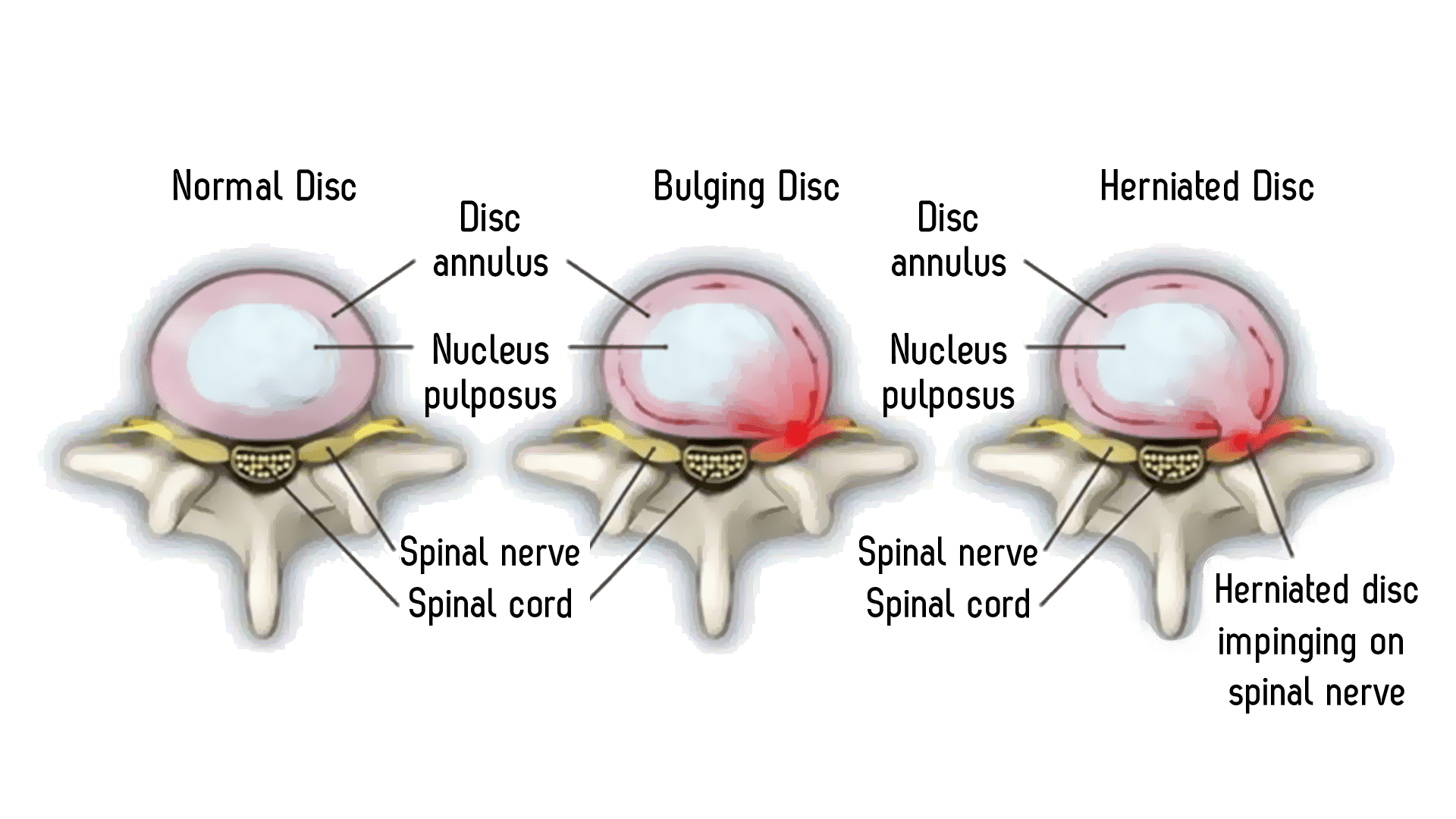
The annulus fibrosis layers can suffer micro-ruptures from falls, impact, extra strain etc. which can cause hardening, calcification and fibrosis of these layers. The endplate can also become calcified, which can also affect the health and function of the nucleus pulposus. Ultimately these changes create a weakness in the area that can progress, over time, to a disc injury like a prolapse, where the nucleus pulposus is displaced causing a protrusion, extrusion or sequestration. It's like the onion ring has been broken with or without the skin breaking and the contents has pushed toward and sometimes beyond the outside layer.
Having a disc bulge can be extremely painful and the body can limit movement in order to protect the area. The reason there can be so much pain is that the outside of the annulus fibrosis and the end plate are innervated by the sympathetic nervous system, which is our fight and flight side of the nervous system. When the area is irritated, the nervous system reacts to protect the area. To do this, it places tension on the surrounding muscles, however this reduces blood flow and ultimately impairs the body’s natural repair cycles. When the brain gets disturbing messages from the tissues, it senses a problem and activates a pain response which we feel as lower back pain for example. The body’s protective response and our pain makes us stop what we are doing to save the tissues from further damage. We are immobilised and in pain. Sound familiar?
The great news is that disc injuries can be treated and we often see great results in the clinic. I believe this is because osteopaths treat the local area plus any other areas of the body that are placing extra pressure through the disc or spine. On a local level, thorough treatment of a disc issue involves treatment of other parts of the body around the disc including the skin and muscles, the nerves in the area and organs that share a nerve supply.
Fortunately, osteopaths are well placed to help to use highly effective hands on techniques to
- improve the blood flow to an area, to get oxygen and nutrients to the area.
- Improve drainage of toxins and wastes away from the area to improve tissue health
- restore range of motion to the joints in and around the area
- reduce the tension in the muscles in the area, reducing pressure on the joints
Overall, osteopathic treatment can reduce pressure on the area from elsewhere and also in the injured area to help the body clear the inflammation so the body can heal better and you experience less pain and more mobility.
There are also some lifestyle changes that can support healthy discs.
Tips for healthy discs
- Drink more water - make it filtered, good quality, room temperature water for best results.
- Walk more - move the fluid to flush around your spinal tissues
- Reduce acidity - clean up your diet, move more, breathe better
- Get osteopathy - ensure your spine is at its best and the tissues are as healthy as can be
Don’t wait until your disc can no longer handle the stress on it and then eventually herniates. If you have back pain please come in and see us, we would love to help!
We use hands-on techniques and lifestyle advice to help people like you suffering pain, stiffness, illness and injury to reduce pain, move better and return to the things they love to do so they can live happier, healthier lives. For further information, please contact us on info@head2toehealth.com.
This information is intended as a general guide only and is not specific for any particular condition or situation. This information is for educational purposes only. Please seek specific advice for your individual circumstances.